Name: Steve Gordon
Occupation: Financial Planner – Oyster Wealth Management
Home Town: Bury St Edmunds
Questions
What is your running background?
It all started in my early 30s with a bucket list scribbled on a sheet of A4 and a dart board. Four months later I was running the London Marathon, which quickly became a passion (OK, obsession) and I haven’t really stopped since. It didn’t take long to stumble into this underground ‘Ultra Marathon’ scene, and with it a whole new set of boundaries to break through. Twenty-odd years and a lot of miles later, ultras are still teaching me the same lesson they taught me on day one: with the right mindset and a stubborn streak, you’re capable of far more than you think. I just keep finding new ways to prove it to myself.
When did you first start running Ultra marathons and why?
My mate Studney was a seasoned marathon runner just as I was starting out and suggested we run a marathon together. He asked me to choose one and we’d do it… apparently he’d already run Paris, New York and a bunch of others, so I thought screw it, let’s go big — and I entered the Marathon des Sables in 2004. I had no idea what I was doing but somehow winged it and finished. I did it purely for fun and adventure, but something stuck. I get a kick out of doing things very few people would even think possible, and I’ve been finding ways to stretch my capabilities ever since. Two decades on, I’d like to say I’ve learned to prepare properly. Mostly, I have.
When or where (at which events) are we most likely to see you?
I’m a creature of habit, so more than likely you’ll find me eating up the miles straight from my own front door. We live on the edge of a National Trust estate, so I’m often out running there — the deer have long since stopped being impressed. In my neighbouring village there’s a 10 in 10 every year and I’ll usually be there in July, using it as the backbone of my Spartathlon training block. I’ll also try to get a couple of Biggies in during the year, to give me something to aim for and someone new to chase.
What are your personal key running achievements to date?
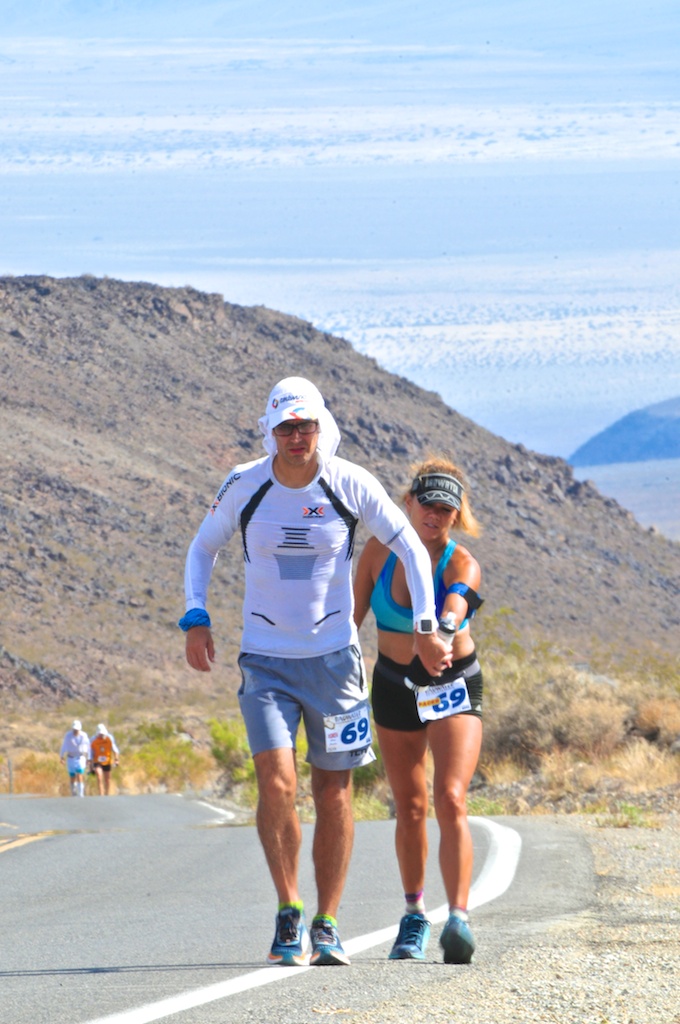
Four Spartathlon finishes, a Badwater finish, and winning the Deadmans Ultra (200 miles), along with plenty of other long days out. I’m proud of all the hundred-plus races because of the training, commitment and sheer bloody-mindedness they demand. What keeps pulling me back is the ‘not knowing’ — whether this will be my day or not — and getting to be the main character in my own version of The Hero’s Journey. Even after all these years, the outcome is never guaranteed. That’s the whole point.
What was your hardest experience?
That’s such a difficult question, but probably the ones when I can’t see a way forward anymore and the voice in my head says that’s it – you’re done – it’s not your day, go home.
My most vivid memory of this was during the Thames Ring 250 in 2015. At mile 75 my feet were a wreck, blistered, bruised and sore. The very thought of doing 175 miles more was beyond me and that was my problem, I saw 175 more miles.
I didn’t reduce it down to something I could do – like another mile, then another. Not until a friend I rang asked me what else I had planned for the day.. That helped reframe my goal to just get to the next CP, then maybe the one after that.. and I finished – it wasn’t pretty but from that moment on I was a proper Ultra runner. If I could do that I can do anything.
What is your typical race strategy for an ultra?
Start at the back, so that nobody can overtake me, then reel in as many runners as I can, building my confidence as I go until I feel like a superhero.. go slower than I should, stay patient, fuel early, and trust the process. Small, steady steps carry you furthest.
What does a typical training week look like?
50 – 80 miles a week in the months leading up. Some core strength work as well and for something like this add in heat training for the last few weeks. Robbie Britton coaches me and has been instrumental in giving me structured training to get me into my best shape.
What one tip would you pass onto people running an Ultra marathon for the first time?
Don’t focus on the big number — break it down into little chunks, like a mouse eating an elephant. One bite at a time. Stay on top of your nutrition early and don’t ever let it slip; it’s much easier to keep the fire fed than to relight it. Take regular micro walks of a minute or so to give your legs a break and recalibrate your body. And don’t neglect your leg workouts — strong legs will get you there. Running alone in training will still get you there too, but it will hurt a lot less if the legs are strong. Trust me on that one. Finally, reward yourself at key points — the first marathon, Corinth, the mountain. Little celebrations keep the wheels turning.
Tell us one interesting fact about you?
I used to be a chef in my first career and ran a restaurant when I was 19. I was working 18 hour days.

Have you taken part in the Spartathlon before?
Yes — I’ve got four medals. Each finish is unforgettable, and I feel grateful and emotional every single time I touch the foot of King Leonidas. It doesn’t fade with repetition; if anything it gets deeper, because you know exactly what it cost to get there. I don’t think there’s a better feeling at the end of any race, anywhere.
How will you prepare specifically for the Spartathlon race?
By building endurance, heat training, and practising efficient checkpoint routines until they’re second nature — seconds saved at 75 checkpoints add up to real time. In every training run I imagine myself running Spartathlon. Mental preparation is so important, because when you want to stop (and you will) you need a WHY that’s bigger than anything else to keep you going. So there’s a lot of visualisation: the heat, the night, the mountain, and that statue waiting in Sparta.
What tip would you pass on to those taking part for the first time?
Remember why you are here. You chose this — to take part in one of the most iconic ultramarathons on the planet. You will love everything about the experience. You are good enough to belong in this field of athletes; you earned the right to be here, and you’re about to have the best adventure. Soak it up and use your time wisely. Talk to previous finishers, hone your tactics, but make it your own race, not someone else’s. The race has a way of finding out who you are — let it.
What are you looking forward to at the Spartathlon race?
Meeting fellow British Team runners and catching up with old friends — this race has given me friendships that outlast the blisters. The mountain is special: not as hard as you might think, but the sight of twinkling stars and head torches bobbing above and below me is unforgettable, and it gets me every time. And the finish line — if the Gods allow me to pass this year, then watching fellow runners come home can be very emotional indeed.
What are you not looking forward to during the Spartathlon race?
Getting a telling off from my crew for sneaking in a quick nap. There are no hiding places from them — they have eyes and ears everywhere. I’ve tried. It doesn’t work. I’m also famously fussy at checkpoints — turning my nose up at perfectly good food 120 miles into a race — and Michael and Amanda have collected quite a few stories on that front. They’re not shy about telling me when I’m being too fussy and need to man up. They’re usually right. Usually.
Will you be bringing any support crew to the race? (If so, please introduce them briefly)
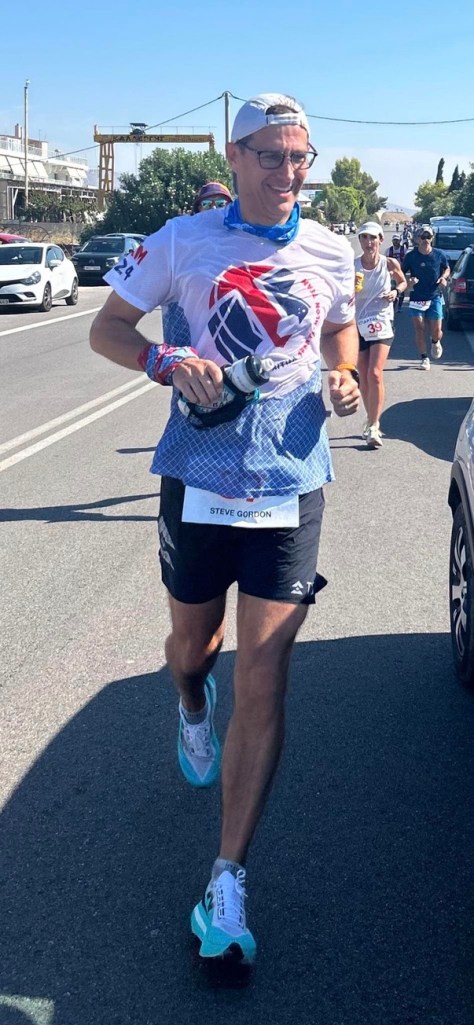
Michael and Amanda (top team sponsors at Avani), who have crewed me three times before. We make a great team and they know exactly how to keep me moving when I don’t want to. They know the race inside out and they’ll be there with me every step of the way. We have a plan… and a backup plan for when I ignore the first one.